Monday, 8 January 2018

Review: The Post

The Post (2017) - Steven Spielberg

       Every other movie that comes out these days loves to tout that it's "Based on a True Story," especially when it comes to these awards-driven December films starring big-name actors and big-name directors. And hey, real life has had some pretty crazy stories, so it makes sense to mine our real-life human experiences to find drama, conflict, humor, and empathy. But sometimes I feel like it's a nervous tick of the filmmakers and producers, like the idea that this is worth your time has to be driven into your brains in the most blunt way possible: It's real! This really happened! Isn't that so cool?! The biggest problem with this kind of narrative endeavor is it can leave the audience removed from the experience in trying to suss out what is fact and what is flourish. Movies and real life? They're really different. Nothing ever happens all that excitingly in real life, so when movies showcase scenes of people researching or doing equations on a window (always a window, ALWAYS a window) with chase music playing in the back, it usually mostly serves to only remove me from the actual story. Movies like The Post (while still really well made and well acted and well blah blah blah) beg the question of "how much do we keep it true to real life and how much do we want to make it more like a movie?" They definitely decided closer to the latter, at times to the detriment of the overall experience. But it was still Streep and Hanks and Stuhlbarg and Odenkirk and David Cross (Mr. Show!) and it was an extremely timely message of the importance of journalistic integrity standing up to an evil Republican regime, so, yeah, it was still pretty good.
       The Post tells the true life story of a government study about the Vietnam war that was leaked in 1971, and the legal and publishing battle that followed when Nixon's government tried to shut down the New York Times (and soon after The Washington Post) from printing anymore of the leaked report. Is it a crime against national security, or is it the people's right to understand exactly what the government is doing and saying behind closed doors? Obviously, if you know anything about the current state of anything, this movie is remarkably topical for our country today. And even when it does it kind of schmaltzily (read: Spielberg), its message of the importance of free print, that the media exists to aid the governed and the governing, was legitimately moving. The free press IS important, you guys! Spielberg reminded us of something very important! Also, let's face it, the acting caliber alone in this movie is enough to make it palatable for two hours. Streep and Hanks could basically fart for a hundred and twenty minutes and I'd still see it.
       Another of the movie's strongest points (and once again once that is so timely for this awards season you'd almost think they rushed this out to theatres on purpose?!) was Kaye Graham's (Streep) constant undermining simply for being a woman. The paper was her father's and when he died he gave the reins to her late husband who committed suicide, thrusting the position of power on her, a position she never expected and one that all the male white-hairs on the board of the paper are certainly not ready to accept. Streep's performance is one of nervousness and formality but with an unchecked reserve of strength and determination no matter how much the men around her try to beat her down. Her mannerisms are cautious and understated, and she truly sells her character's apparent nervousness but also her huge reserve of intelligence and ability.
       My biggest complaint with this movie is that it's so intent on making sure you know you're watching a movie. And hell, it's Spielberg directing so the movie looks effortlessly glossy and perfectly staged and extremely expensive, so it's not like that's overall a terrible thing, but it just kept poking at me in the back of my head. Case and point? The first scene of the movie starts with a black title card that reads: Vietnam. 1966. And then guess what music starts playing? If you chuckled and sarcastically said, "What? CCR?" then goddamnit you're right! Oh my GOD. I love CCR, alright? But if I ever see one more fucking movie taking place in Vietnam while "Fortunate Son" plays I am going to straight stand up in my theatre, dookie in my hand, and throw it at the screen. THERE WERE OTHER SONGS DURING THE VIETNAM WAR. Why does every filmmaker in America think we won't realize what era we're in if "Born on the fuckin' Bayou" isn't playing?
       The other issue is the never-ending dramatic score that amps up every scene to 11, regardless if someone is stealing government documents or ordering a ham sandwich. Once again, I know this is a movie, and movies are supposed to be, ya know, exciting, but you know what's not exciting? Watching investigative reporting happen. It's mundane, involves a lot of waiting and a lot of farting through dead leads and meaningless paperwork. But that doesn't stop The Post from making me feel like a Russian spy was about to bust out of the newest box of classified documents and shoot everyone with cyanide darts before making a daring escape with a rip-chord through the window. It felt so overwrought at times it completely removed me form the actual story unfolding on-screen. All I could think was, "Wow they sure are trying their hardest to make me give a shit about this." But the thing is, I already did care about it. It's an important story and a relevant topic. Those things don't automatically have to equal shock and anxiety. The drama from the story and Graham's difficult decisions should have been enough to make the movie compelling, but it's almost like Spielberg didn't trust his audiences enough, so instead he had Iranian soldiers chasing a commercial plane down a runway (Argo reference what-whaaat).
       But even with all that in mind, this is still a really great-looking film with technical expertise and performances so good it almost seems like they're not trying (I'm not convinced they really are. Hanks and Streep make it seem quite effortless). I'd have liked to see it told a bit more straightforward without flourish and thrills, but I guess I shouldn't be complaining too much when the movie is championing the rights and necessity of an unbiased press that is unafraid of a possibly totalitarian Republican regime. Huh, why did that sentence send feelings of utter despair down my spine? Maybe it's the stupid fake media.

Grade: 7 out of 10 ACTINGS.

Friday, 5 January 2018

Review: I, Tonya

I, Tonya (2017) - Craig Gillespie

       Going into the movie I, Tonya, my overall knowledge of the Tonya Harding Nancy Kerrigan story was limited at best. I remembered it kind of like the OJ Simpson wrongful accusation of double-homicide (#hedidn'tdoit#hahaI'mjokingofcoursehedid), as in it was an event that happened when i was like 6 or 7, and adults talked about it a lot. From there all my understanding of the story came from a Weird Al Yankovic song called "Headline News," a parody of Mmm Mmm Mmm" by the Crash Test Dummies. Sing accordingly in your head:
Once there was this girl who
Swore that one day she would be
A figure skating Champion
And when she finally made it
She found some other girl who was better
And so she hired some guy
To club her in the kneecap
Full Disclosure: I still listen to this song. I love it. But so what I'm trying to illustrate here is other than the barest bones of it, I knew very little about the actual Tonya Harding story. So I was a blank canvas when I sat down to watch too-crazy-to-be-true-true-story-sort-of-not-true-based-on-who-you-ask-sort-of-biopic I, Tonya, which chronicles not only the famous "Incident" but Tonya's whole life, including growing up with an abusive mother and then an abusive husband and going to the Olympics twice by the age of twenty-three. And what resulted is a movie that, much like its protagonist, is kind of a mess but still a lot of fun and great at what it's trying to accomplish.
       The movie starts off by saying it is based on wildly contradictory accounts from the stories principal players, Tonya Harding and her high school mustache-turned-husband Jeff Gillooly, accompanied by talking heads of the two describing their own memories of the events some time after the events. The movie splashes meta elements of narration throughout as well, like Tonya's manager speaking directly to the camera to confirm, "Tonya really did this," during her intense training montage, to Tonya shooting a shotgun, cocking it, and looking directly at us to state, "This never fucking happened." For a story as absolutely ridiculous as this with so many idiotic main characters running around, it makes perfect sense for it to take on this unreliable narrative point of view. At the end Tonya even says, "There is no truth," to kind of belabor the point home, and for the most part it works. But at times the movie wants to have its meta cake and eat it too. If you insist on not insisting things happened a certain way, you can't also expect the audiences to feel the empathy you want us to for the characters. Instead every character other than Tonya (and often times including Tonya) come off as blithering idiots and completely unlikable, almost to the point of exhaustion.
       The movie has pacing problems toward the third act, focusing far too much of its time not only on the "Incident" but the fucking idiots who supposedly perpetrated it. Honestly, the whole movie could have ended before the entire knee-bashing and I would have been fine with it, because the story they created around Tonya and her mother and (at times) shithead Jeff was definitely compelling enough. Margot Robbie totally kills the entire flick, and once they stopped focusing on her as much the movie lost some of its steam and didn't pick back up until she started skating again.
        Part of the reason for that is because Jeff Gillooly (The Winter Soldier's Sebastian Stan, who is appropriately a fucking asshole but still seems slightly miscast) is such an unlikable presence in the movie that after the nineteenth time he beats the shit out of Tonya, it's really not as funny as I think the movie hopes it is. The movie is extremely raunchy and dark and severe, and most of the time it works, but there are scenes where the violence happening on screen does not match up with the comedic tone the movie is trying to represent.
       But overall these are small complaints for a movie that overall I enjoyed very much. As previously stated, Margot Robbie is fantastic as the titular Tonya, giving her a wonderful mixture of pathos and fecklessness. She had an extremely hard childhood, no is denying that, but as an adult it's rendered her incapable of ever accepting responsibility for anything that goes wrong in her life. She sells the mixture wonderfully and the movie is endlessly entertaining because of it. Allison Janney is unflinchingly monstrous in her portrayal as Vonya, her overbearing and abusive mother. She makes each insult and each slap sting for the audiences while still being fascinating to watch. Most of the writing (especially for these two characters) is sharp and incisive and paints a complex portrait of family and raising a daughter.
       As someone who never really cared much about figure skating before (read: at all) I went home and youtubed forty-five minutes worth of Tonya Harding doing triple axles. It was badass. Regardless of some of the smudging of facts, I really felt the movie did try and give us its most truthful version of, well, not necessarily the facts, but what truly mattered most to understanding Tonya Harding as more than just "that bitch who bashed her opponent's knee in." It's crude, and raunchy, and even at times messy, but so was Tonya. And that's pretty cool.

Grade: 5.4, 5.5, 5.3, 5.4, 5.4, 5.5 (Are those accurate skating scores? Maybe!)
Random Thought: I wish they had included more real-life footage during the movie instead of just during the credits sequence. Actually seeing Tonya Harding do the triple axle was way more impressive than the weird CGI-face-plastered-on versions they gave us during the movie. They make it look appropriately impossible during the movie, yes, but seeing her really do it is fucking insane. Did you guys know how insane triple axles are? I had no idea. I think I'm gonna go watch some more Tonya Harding skating videos. Chick had SASS.

Oh, and here is a link to the that Awesome Weird Al song I mentioned. Tonya and Nancy are the second verse. ENJOY.

Thursday, 4 January 2018

The Top 10 Movies of 2017

None of these are on it!
       2017 was a year, indeed. It took 365 days for the Earth to complete its rotation around the sun, and since we all subscribe to the Judeo-Christian Liturgical calendars because of the church's grasp has consumed our lives since the dawn of man, we decide to pretend this whole cycle is actually starting over again on January 1st, instead of just hurtling us closer and closer to death and nothingness at the same, never-ending speed.
       ANYWHO! Movies! Let's rank em! These are my favorite movies of 2017 put in the most honest order I could think to (kind of) arbitrarily rank them. Of course it's all subjective, but I tried to rank them in such a way that I felt best reflected my overall emotional response and technical merit. I also tried to think about how the movie stayed with me since I first saw it. Did my opinions change? How did it sit? I've discerned that overall this year I loved dramas that for some reason I thought were comedies, and dramas that were dramas that made me CRY. And with that, let's get started. Here's to more movies in 2018.

Honourable Mention
Good Time (Benny and Josh Safdie)
The Big Sick (Michael Showalter)
I, Tonya (Craig Gillespie)
Molly's Game (Aaron Sorkin)
John Wick Chapter 2 (Chad Stahelski)

Missed it and I'm sorry!
Raw (Julia Ducournau)
Brigsby Bear (Dave McCary)

And now, the real show! Here's my top 10 of 2017:

10) mother! - Darren Aronofsky
Let's get my divisive pick out of the way: I really liked this batshit crazy movie. I liked the creeping tension, I liked the beautiful-turn-claustrophobic design of the house, and I even like the bizarre non-human interactions between characters. But I legitimately think this movie should be viewed as a dark comedy, and then it's pretty awesome. Especially the last act. Holy shit the last act. Even if it was just done for shock value (and it wasn't, it made sense, kind of), it would still be the funniest, most insane thing I've seen all year.
9) Ingrid Goes West - Matt Spicer
This is my favorite "traditional comedy" of the year, as far as "comedies" go. It's an uncomfortable, almost cringe-worthy black comedy that incisively picks fun at our glossed over Instagram lifestyles. Now while that sounds like low-hanging fruit, it's actually done to cleverly display a broken protagonist with mental health issues. But the movie stays sharp and funny throughout, with great performances all around, including Ice Cube's son, Ice Chip.
8) Phantom Thread - Paul Thomas Anderson
This is a curiously quiet Paul Thomas Anderson film that manages to be heartbreakingly melancholy and oddly funny all at once. Its main focus is the chaotic love between Daniel Day-Lewis (who may have quit acting because this movie made him really sad) and his new muse, Alma. It's Paul Thomas Anderson through and through, with gorgeous visuals and meticulously crafted detail to the ornate beauty of Reynold's Woodcock's barely kept together life.
7) Call Me By Your Name - Luca Guadagnino
Here we have another quiet, heartbreaking romance, but here the emotions are all clearly on display, seen through the eyes of a blossoming seventeen year old. This movie's ability to remind me of the futility of youth was beautiful and heartbreaking. The whole movie is gorgeous, from the lush Northern Italy scenery, to the extremely erotic encounters Elio has throughout the film with Armie Hammer. The movie's not only beautiful and sad, it's sexy too.
6) Coco - Lee Unkrich
This movie really kicked me on my ass, and I was not expecting it. Sure, Pixar. Okay, Dia de los Muertos, sure hope you don't get racist. Musical? Blegh. But I was so wrong on all three accounts. It's easily the best Pixar movie in a decade, and it's thanks to its gorgeous animation and design of the Land of the Dead, the plucky cuteness of our protagonist Miguel, and its message of loving and being there for your family. I sure wasn't expecting to love this movie as much as I did, but it had me crying like a baby, and, like, legit everyone? I love crying in the movies.
5) Baby Driver - Edgar Wright
This is the coolest fucking thing I've seen all year. This is the coolest movie possibly all decade. This movie is a rock'n'roll playlist suped up with NOS and snorting ketamine off a shotgun. Some people have tried to detract from its greatness, saying it's just a music video, but they are totally missing the point. That is the point. It borrows little bits from everything we've ever absorbed in pop culture (fast cars, rock and roll, cute waitresses, bank robbers) and then Wright morphs it just a little bit to make it his own, complete a shiny badass gleam that screams "I am so fucking cool," and MEANS IT.
4) Get Out - Jordan Peele
Get Out is one of the most provocative movies of the year, and one of the first successful horror movies in the past few decades to really get that seething commentary down perfectly. My favorite thing about the movie, even more than how smart it is, is how it trades big jump scares or CGI monsters for slow, dreadful suspense. The entire movie builds slowly and creepily to its huge reveal, and it never misses a beat. Jordan Peele is an absolutely fantastic director/storyteller. It's like...yeah, we already knew that, but not to this degree.
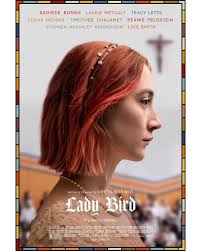
3) Lady Bird - Greta Gerwig
"Coming of age" story can sound kind of reductive at this point. We've seen people growing up and "figuring out life" a thousand times before (one word: plastics), but the reason we've seen it so many times is because when it's done right it can be the most personal and relatable story there is. The thing I loved most about Lady Bird is even though there were lots of things I couldn't personally relate to (being a girl, Catholic school, Sacramento) it was still so easy to emotionally connect to. Because no matter what, growing up has universal truths we can all understand. It's also hilarious and has lots of pooka shell necklaces.
2) The Florida Project - Sean Baker
This movie is heartbreaking perfection. It's so well done, and so subtly devastating that you barely realize how sad it is until it's too late. The movie mostly follows kids who live in a motel near Disney World, and the fact that it has kid actors in it is NEVER annoying and that blows my mind. Willem Dafoe plays the best version of a disgruntled old guy with a heart of gold possibly ever. It's beautiful and funny and sad and wonderful and everyone should see it.
1) The Shape of Water - Guillermo Del Toro
Oh man. This movie. This movie, man. This movie just does it for me. Men? Womyn? This movie? For. Me. Haha, okay seriously. This movie just worked so wonderfully on me. It has atmosphere and style and loving emotion pouring out of its ears. It's a ridiculously simple (simply ridiculous?) premise that never wavers from its singular vision and it works perfectly. Sally Hawkins imbues so much love and sweetness as the mute Eliza who falls in love with the Creature from the Fuck Lagoon (sorry not sorry). The score, the dark atmospheric mood mixed with uncomplicated love, and throw in a maniacal Michael Shannon ripping his fingers off and Michael Stuhlbarg as a Russian spy? Good lord I love this movie so much and I never want to stop loving it.

Wednesday, 3 January 2018

Review: Phantom Thread

Phantom Thread (2017) - Paul Thomas Anderson

      Paul Thomas Anderson's abilities as a filmmaker to create a fully immersive world that is not only captivating but singularly specific, almost surprising, has never been called in question (well, I mean, I don't know, has it? I don't think so. I feel like I would heard about it if it had. Ugh, I've been just been so busy and out of the loop lately. Did you know I haven't even seen Stranger Things Season 2 yet? I need to get my shit together). Whether it's the world of porn, 1960s California stoner detectives, or turn-of-the-century oil-tycoonery, Anderson gets deep into the world he's presenting with deep, symbolic images, complicated characters who skirt around good and evil, and (at least for the last decade) an ominous and almost assaulting score (thanks to Radiohead's Johnny Greenwood) that makes Hans Zimmer sound like an idiot who fell asleep on his keyboard. So it's no surprise that he took all of those elements from his arsenal when making Phantom Thread, the story of Reynolds Woodcock (Daniel Day-Lewis), an extremely famous dress designer in postwar London who falls in love with Alma (Vicky Krieps). What is surprising, however, is also how bizarre, how strangely dramatic yet funny and petulant the movie is. It's very grand and sweeping and at the same time very odd and quiet, like an absurdist British rom-com!
       This film's delve into the uncomfortable and fragile egos of damaged souls focuses on Daniel Day-Lewis' Reynolds Woodcock (great name) and his tumultuous relationship with waitress turned muse turned lover turned...well I don't want to give it away, but let's just those two are cray. Woodcock is clearly brilliant at what he does, he's fastidious in his work and in his every day life, presents himself impeccably and acts with a refined air of wealth and decorum. He's also a petulant, fussy, short-tempered child who throws tantrums when things don't go his way. At times it almost seemed as Anderson could have been poking fun at himself, because his own film-making styles of meticulously beautiful shots and painstaking visual detail seem to perfectly encapsulate how Woodcock wishes the world around him would adhere to. And most of his life does adhere to that, until he meets Alma.
        A self-proclaimed life long bachelor, it's clear from the first scene that Woodcock goes through women like goes through fancy french lace. In a particularly funny exchange early on with his sister Cyril (Leslie Manville), she asks him if he wants her to get rid of his current live-in girlfriend, to which Woodcock barely registers an answer, but clearly means yes. It's obviously the nine hundredth time they've had this conversation, and it won't even be the last in the movie. From there, what keeps the narrative momentum of the movie going is, "Well if he does this all the time, what makes Alma special? Why are we seeing this one, considering this man's life is so constantly the same?" And from there it's up to Vicky Krieps to help fill in the lines, and hoo boy, she fills them in. Alma is confusing and unpredictable, going from doting to malignant in the same shot. She has her own agency and ideas for how life should be lived, and that's exactly what infuriates Woodcock so much. She sees the genius and the good in him, but is constantly angry at his inability to change a single thing about himself to cater to her needs. He's often short and even cruel with her, but she finds...let's say interesting ways to help keep a strange balance in the relationship.
       But seriously you guys? This movie is kind of ridiculous and hilarious. Everyone here is either such a stunted child or controlling manipulator, it's almost like Paul Thomas Anderson is making a dramatic fancy-boy version of an episode of Arrested Development. Some of the plot points (which I can't get into too  much detail because it's too great to be spoiled) as the story progresses get downright goofy. Their choices are absolutely believable because of the caliber of acting and writing happening, but when you really remove yourself to think about it, it's insane. Especially for such a meticulous and well-behaved world they've created. Day-Lewis is basically Buster, his sister is Lucille, and he's dating some amalgamation of Rita and Gob. It's bonkers. (Miiiister Effff)
       The more I think of this movie the stranger and more curious it gets in my head. It's at times heart-breakingly sad, operatic, and bleak (like so many of his movies) but at the same time is imbued with a different, stranger, more child-like tone than most of his other movies (Punch-Drunk Loves come to mind as its closest comparison, in so much that they are about weirdos falling in love, but the comparisons basically stop there. Punch-Drunk Love is about lovely if slightly damaged people, while the lovers of Phantom Thread are all, at best, high-functioning sociopaths). It has gorgeous, flowing scenes that spill from one to the next with a cinematic beauty that is hardly rivaled in today's movies, and then got huge laughs when Daniel Day-Lewis told a doctor to fuck off about six times in a row. My showing got enormous laughs throughout (which truly makes me hope the movie is actually funny and not just that Hollywood movie goers are a bunch of self-referential, self-satisfied pop culture fart-sniffers--oh god).
       While mentioning the showing I saw, it was projected in 70mm, and it was fucking gorgeous (yes, I had to google research the difference between 70mm and 35mm to totally understand the difference, and basically after two hours of doing so I came to the conclusion: It looks better). Every shot had so much attention to detail, every dress and every stitch Woodcock working on so crisp and beautiful. And the sound editing was also so strong and clear, often used to punctuate a lot of the visual sight gags the movie creates (watch Alma eat soup with a metal spoon, and then close your eyes and just listen to it, both are fucking funny).
       Phantom Thread is a strange movie that subverts expectations and confounds while still giving us sad, complicated characters in an absolutely stunning tableau of gorgeously bedizened patricians in impeccable clothing and ornately designed flats. And it reminded me of Arrested Development. So basically it's a win-win for everyone.

Grade: 8 out of 10 Mushroom Omelettes

Tuesday, 2 January 2018

Review: Call Me By Your Name

Call Me By Your Name (2017) - Luca Guadgagnino

       I have been putting off writing this review for a few days now, and I'm not entirely sure why. I suppose, on some level, I am intimidated by the idea of reviewing this movie, and not just because it's sooooooo great (it is a very good movie) and I don't want to get gushy. It's something more elusive. Call Me By Your Name is a beautiful film filled with gorgeous imagery, caring performances, and unbelievably well-crafted characters. This movie is extremely intimate and personal, so much so it's almost like I shouldn't even be watching it. It has the quality of making you feel like you're quietly spying on two people falling in love over the course of a summer. It's a quiet film of the utmost captivation, and one's response to the film is dependent entirely on how emotionally you attach yourselves to the characters involved. Personally, I had a strong reaction watching this movie, and putting it into categories of "good" and "bad" (partially useless because it's all very good) are even more unnecessary because this movie is all about mood, atmosphere, and honest feeling.
       TL;DR this movie is great and heartbreaking.
        The film takes place somewhere in Northern Italy (the exact location never specified, giving the story a kind of ethereal feeling from the beginning, as if it could be anywhere and nowhere, an impossibly beautiful setting where everyone is gorgeous and speaks seven languages), in the summer of 1983. The time period, like most of the movie, really, is a quietly curious little detail. It certainly shapes some of the style of the story, but for the most part it could take place any time. But it adds an interesting depth that is below a thin, Richard Butler-y layer. Timothee Chalamet stars as Elio, seventeen-years-old, extremely intelligent and piano ingenue but perceptively quiet, while he and his family of professors and prodigies are vacationing in practically unrealistically beautiful Italy, like they do every year. And like every year, his father (Michael Stuhlbarg) has a college student/research assistant from the states stay with them. This year it's Armie Hammer's Oliver, Adonis-sexy and impossibly sculptured, if not a bit aloof to the point of impolite.
       And basically everyone just has a nice summer and they're all friends and then it's over.
       Haha, of course not, people start fuckin'. And it's pretty hot.
      The point is, the plot that follows is barely there and whatever is is barely worth describing. What matters is the slow, almost cautious atmosphere the movie creates around these two characters, who despite their palpable (and did I mention hot?) attraction to each other, are confused by their own emerging sexuality and the ever-present pressure of societal norms (more on that later).
      While Stuhlbarg and Hammer give amazing turns, the movie belongs to Timothee Chalamet's Elio, who has the difficult job of being simultaneously quiet, engaging, surprising, and relatable. On paper it might seem tough, but Chalamet (who's only 22) sells it so well. He has angst with never seeming angsty, and he imbues every scene he's in with a kind of precocious naivete. He's crazy smart, but he realizes how young he is, but in realizing how young he is once again proves how smart he is. But at the same time he's confused, anxious, a little bit scared--oh yeah--a fucking teenager. Exactly.
       The almost lackadaisical pacing of the film never feels boring for a moment, thanks in large part to the absolutely gorgeous cinematography and direction. I wrote a review recently for All the Money in the World (don't see it, but do read my review!), a movie that also takes place in Italy, and I complained about how muted and grimy every shot in that movie was. A few days later I was so goddamn pleased to see this movie and how dazzlingly it treated the scenery of the dreamy Northern Italy landscapes.
       I make jokes about the sexiness of the movie (cuz that's what I do, I make jokes, also, hot damn Armie Hammer dude, he is one of those hot-ass water statues they done dug up in the sexy ocean), but it also has a very subtle air of heartbreak surrounding it. Not in a way that makes the movie sad, exactly, just in a bittersweet kind of way. I love so much that the movie never makes Elio or Oliver's sexuality the focal point of their love. It's not compelling because they're gay, it's compelling because they are both (Elio in particular) discovering things about themselves they didn't know where there before. It would have been easy to add a crying, disappointed old-world Grandma shaming Elio for wanting to be with a man, but it doesn't do that at all. It's heartbreaking because we know it's not going to last. We know from the beginning Oliver isn't staying long. We know that Elio is only seventeen and there's no way this kind of relationship will sustain itself, even if Elio doesn't know that. Regardless of your preference or personal history of relationships, everyone, ev-er-ee-one, can relate to that exquisite, stupid pain we all felt when we were teenagers and realized something wasn't going to last forever. This movie is that bottled up, nostalgic and sad and beautiful, wrapped up in a fucking gorgeous countryside setting.

Grade: 5 cum-filled nectarines
Random Thoughts:

  • I'm supposed to believe Armie Hammer is Jewish? Shyeah-right, that dude is the waspiest, blue-eyest, blonde-hairest Aryan-est looking dude on Earth. He didn't just play one Winklevoss he PLAYED TWO OF THEM. Dude's a Protestant or something fursure.
  • Michael Stuhlbarg might be my favorite non-Michael Shannon actor working in Hollywoo right now. Which is another reason why you should all go see Shape of Water. Fuck, I love that flick. 

Thursday, 28 December 2017

Review: Darkest Hour

Darkest Hour (2017) - Joe Wright

       The first scene of Darkest Hour is a wide crane shot over the floor of English Parliament in 1939, the day that Neville Chamberlain resigned as Prime Minister. It's a fine shot that very elegantly shows a bunch of old-ass, wrinkled white men gently shouting at each other in British politeness. "How dare you! Well how dare you sir!" Ugh. This was my first red flag: Old white men surrounded by more old white men doing not only old white men things but BRITISH old white men things. UGH. Then my second red flag came mere seconds later when I reminded myself, "Holy fucking shit. How many times are they going to keep telling this same fucking story over and over and over again?" British integrity! Decorum! Parliament! Churchill! Cigars! Difficult decisions about the honor of our noble Empire! Fuuuuuuck you.
       Look, I get that WWII was a pivotal point in the history of what created our modern world, and I definitely hate Nazis as much as any American--cough, well, okay nevermind, but still, you get it. But why, why, WHY are British and American filmmakers alike so obsessed with celebrating how great we did at shoving it to the fascists 80 years ago? Is it because we feel guilty about not doing as good a job at it anymore (ha, no)? Is it because old white filmmakers are desperately trying to prove the white man's diminishing relevance in today's world (ha, yes). No matter the intention behind showing us the same fucking story over and over again, it has, without a doubt, lost its oomph.
       Did you know the King George VI had a stutter? I did, because I watched it exhaustively portrayed in The King's Speech (that movie sucks). Did you know Churchill was a somewhat-despised-by-his-own party-grump, who, against all odds, succeeded in uniting the British government against the inevitable onslaught of the German forces? I did, because I watched the first season of The Crown last year (that show is actually pretty good, but thank Christ, John Lithgow's Churchill is just a supporting player to Claire Foy's much more interesting Queen Elizabeth). So why-oh-why does this movie even exist if not for any reason other than to get a famous British actor to put on hours worth of fat makeup and snatch up an Academy Award for being one of the BRAVEST WHITE MEN IN BRITISH HISTORY? There isn't any. There is no other reason for this movie to exist, and even then it still serves to show the Godly greatness of old white patriarchal politicians. I reiterate: Fuck you.
       Is the movie well made? I mean, sure, yeah. Is it well directed? Yeah, Joe Wright (of better, albeit painfully British movies like Atonement) knows how to stage a scene and get some good shots. Is Gary Oldman good as Churchill? Of course, Gary Oldman does a great, two-hour long impersonation and is unrecognizable as Winston (although, I genuinely feel most of that credit should go to the make-up artists, who no one really actually gives a shit about. I believe David Malinowski is the key makeup artist for Oldman, but IMDB is not very clear on this), but forgive me if I'm not so fucking shocked and in awe of a veteran British actor of great esteem being able to do a prolonged impression of one of the most famous and most imitable figures in British history. John Lithgow ain't British and did it amazingly a year ago. I could copy and paste every actor you've heard of who's played Churchill but it would take up the rest of this review. This movie does not need to exist. They even keep talking about the forces at Dunkirk, ANOTHER MOVIE MADE THIS YEAR THAT WAS ACTUALLY EXCITING. Uuuuuugh, I didn't realize how much this movie annoyed me until I started writing this review. Hah, this must be what all women who finally sleep with me must feel!
        It doesn't even tell a particularly interesting facet of Churchill's career. The movie takes place during the first month or so of his Prime Ministry, where he was contentiously chosen to take the place of Neville Chamberlain against his own parties wishes, because they wanted Stannis Baratheon-- sorry, something-something Halifax--aw fuck it I'm just gonna call him Stannis, to take the position, which he declined for reasons I don't remember, but were surely very British. Should Churchill be open to the idea of peace-talks with Italy and Germany in exchange for agreeable post-war terms? Or should they....not? It's a tricky situation, surely, and one that Churchill grumpily yells about for almost two hours before deciding to take the tube and ask the common people what they think. Christ. Well there he is quickly reassured that little girls and apparently the only black person in England are "totally on yuh soide, Proime Ministah! We loave ya! Aye!" It's shmaltzy farts and I won't stand for it. Then he goes in front of Parliament and (spoiler alert, fart noise) everyone agrees with him! Why didn't he just take the fucking subway at the start of the movie? Sorry Stannis. I wish Brienne of Tarth woud've been there to kill you when the flick began.
        But behind every great man is a great woman, right? At least we can have a strong female character in the mix, right? Well not here! We do have Kristen Scott Thomas and Lily Collins as Churchill's wife and secretary respectively, but they serve to do nothing other than show the audience just what a gentle and caring fucker this old fuck really is. Lily Collins, who is lovely and has a great energy about her as an actor, doesn't get to do a single thing the whole movie except follow Oldman around and look amazed by every time he fucking farts or chugs a whiskey. Good lord, we get it, WHITE MEN DO EVERYTHING AND ARE THE BEST. Have I mentioned 'fuck you' in this review, yet?
       This movie is blatant awards bate and it doesn't need to exist. Churchill was probably (read: probably not) a decent man who did a lot for Britain and for the world during a difficult time in the world's history (probably, maybe, probably not, not really), but we do not need more films about him. We have fully exhausted the golden age of World War II films where we heroically stood up to the Nazis. Now we're just going to have to wait until 2025 when there's a new group of heroic white people who save us from the Alt-Right. Goddamnit.

Grade: Who knows. Or cares. Read a history book or something.

Wednesday, 27 December 2017

Review: Molly's Game

Molly's Game (2017) - Aaron Sorkin

         As a general rule, I hate it when reviews automatically start by referencing the other works of the directors, screenwriters, actors, etc. I don't think it's fair to put so much pressure on the filmmakers previous body of work as a form of dictating what we should feel about whatever this newest, reviewable piece of work is (Please don't go back through my previous reviews to see how often I've done this. I'm not gonna do it, so neither should you. Looove you). Yes, obviously, sometimes it can help set up a certain context for what you're about to see, but often it seems like lazy reviewing to me (And clearly I'm such an ingenue of the reviewing game). Well goddamn it all if I can't do the exact opposite of preaching what I sow (is that a saying?), but it's virtually impossible to review the new film, Molly's Game, the first directorial debut of long time screenwriter of walking and talking, Aaron Sorkin, without discussing his larger body of work. Sure, you can enjoy the film on its own merits, because it's overall a well-made and engaging film, but it's also the most Aaron Sorkiest thing Aaron Sorkin has ever Sorkined. Sometimes you just to have to strap yourself in and smell your own dirty fingertips (is that a saying?).
        Aaron Sorkin is the screenwriter behind A Few Good Men, The West Wing, The Social Network, Moneyball, and similar others. If you're not familiar, all those projects have this in common: Everyone talks fast. So fast. Everyone is the most clever person you've ever heard speak. Every conversation is an intellectual dual where everyone is trying to be the most charmingly coy fuck ever born. Everything is done with a small, sardonic wink, the characters (who are all just idealized versions of how Aaron Sorkin wishes humans spoke, because trust me, they do not speak this way in real life) always nodding to the audience, almost as an in-joke about how much smarter they are than the rest of world. It honestly takes a while to get used to how Sorkin-y he can get, and even when you do, it doesn't mean it's always great. Sometimes it is (The Social Network), and it's used to further the characters and narrative in a meaningful way. Sometimes, however, it's less successful (Moneyball) and it just serves to show unpleasant people not only being unpleasant but also totally fucking know-it-all-y at the same time (how many bullshit adjectives can I invent for this review? I might reach Sorkanistic levels of bullshit!) At best he's very clever, and at worst he creates non-humans that not even aliens would want to anally probe.
       Okay, okay, so how does this all factor into Molly's Game, the true(ish) story of Molly Bloom, the runner of one of LA's biggest underground poker games, packed to the gills with actors and other big celebrities, before moving to New York and getting accidentally mixed up with the Russian mafia and arrested as part of a widespread RICO charge? Well it's important, because not only did Aaron Sorkin adapt the screenplay from Molly Bloom's book, but for the first time in his feverishly sly career, he also directed the flick as well. And honestly? It's good. It's quite good. It's also SO Aaron Sorkin it almost collapses under its witty banter, all-too-clever repertoire, and never-ending slapshot-speed narration.
       But it doesn't collapse. And a lot of that is because Jessica Chastain is the greatest.
       The movie has some missteps along the way (which I'll get to), but Jessica Chastain's protrayal of the titular Molly never gets too precious or clever, despite Sorkin's nonstop barrage of geniuses talking quickly at you. She's strong and doesn't take your shit, but still finds a way to express a sense of humor that isn't too smug (which is essentially Sorkin's number one speed). You not only enjoy watching Chastain get deeper and deeper into Molly Bloom's semi-seedy yet extravagant poker life, you understand the choices she's making. She's one of the most relatable Sorkin characters to ever grace the screen, regardless of her ultra-intelligence and Olympic skiing background. Aaron Sorkin did a great job writing and a good job directing this movie, but including Chastain as its key acting collaborator was possibly the best moves he made.
       The writing is exactly what you'd thing from a Sorkin movie (if you've never seen a movie written by Aaron Sorkin and are still reading this review, you are the greatest person I have ever met and you don't deserve this shitty of a review), so then what about the directing? Considering his movies and shows are so often written like plays, with long monologue following long monologue, I was a little surprised at how he chose to shoot the film: Everything is shot so tight and close, almost always framing everything as near to the actor's faces as the cameras would allow. With so much dialogue so rapidly shooting back and forth it seemed strange to isolate the characters in their own wide frames so often, but there are plenty of times during the film it works (during poker scenes where characters are clearly at odds with each other, or when her and Idris Elba's lawyer character first meet to establish his distrust of her), but there are other parts where it comes off a bit shaky and overly dramatic. There is one scene in particular, a scary scene of violence that I don't want to discuss in detail, but suffice it to say the close-ups come off as hacky and blurry in a very silly kind of way that robs the scene of some of its agency.
I am so fucking attractive.
        There are also some parts that get, as I mentioned before, So Sorkined out that it's almost dumb. A silly, last-minute reconnection with her father (played admirably by Kevin Costner), who pushed Molly to the extremes her whole childhood, and is supposedly a brilliant therapist, tells her he's going to "give her three years of therapy in three minutes." It's the most blatant piece of screenwriting in the whole movie, and it's utterly ridiculous. But even that scene ends on such a sincere, moving moment of utter parenting that I can't even knock the whole thing. In the end it all basically works.
        Sorkin's dialogue always makes for great, scene-chewing performances, and Molly's Game doesn't disappoint (Idris Elba and Michael Cera give great, quick performances that hold their own with Chastain's Molly). Regardless of the schmaltzy ending, or the too-sweet moments between characters that could never quite exist in real life, Aaron Sorkin makes such a strong and valiant case for why this type of story should come from someone like him. The film simultaneously has the excitement and quickness of a good poker movie, but still stays close enough to the protagonist's POV that it remains a dramatically successful film. And let's face it: Jessica Chastain kicks fucking ass.

Grade: 8 out of 10 Michael-Cera-Tobey-Maguires.

(PS. It's totally Tobey Maguire. That guy's a dick.)
Gross.